Double Eyelid Surgery in Seoul, Korea
A natural upper eyelid crease designed for your eye shape — buried suture, partial or full incision chosen by your anatomy, and performed in every case by Dr. Lee Young-geun.
- Board-certified plastic surgeon
- Eye & under-eye specialist clinic
- English support · remote photo consults

What is double eyelid surgery?
Double eyelid surgery (Asian blepharoplasty) creates or refines a fold in the upper eyelid so the eye looks more defined and open. The method is chosen by anatomy: buried suture for thin lids, partial incision for moderate fat, and full incision when there is more fat, thicker skin or a need for the most durable crease. It takes about 30–60 minutes under local anesthesia, most people return to office work in 3–7 days, visible swelling settles in 2–3 weeks and the final result appears at 2–3 months.
Why choose Sinsa L for double eyelid surgery
- Method by anatomy, not preference — lid thickness, fat and skin decide the technique.
- Crease designed for your face — height and shape (in-out, parallel, taper) proportioned to your eyes and brows.
- Ptosis checked first — if the lid is low, correction is added so the crease stays stable.
- International-friendly — English support, remote photo consults, transparent quotes and travel-aware scheduling near Sinsa Station.
Who is a good candidate?
- Single or partial eyelid folds
- An uneven or faint existing crease
- Upper lids that look heavy or puffy
- Makeup that disappears into the lid
- Wanting a natural, defined eye
Double eyelid methods
Buried suture (non-incisional)
Thin lids with little fat; minimal downtime. Learn more →
Partial incision
A short incision to remove a little fat while keeping recovery short.
Full incision
For thicker lids, more fat or the most durable crease.
With ptosis correction
When the lid margin is low, the lift and crease are set together. Ptosis repair →
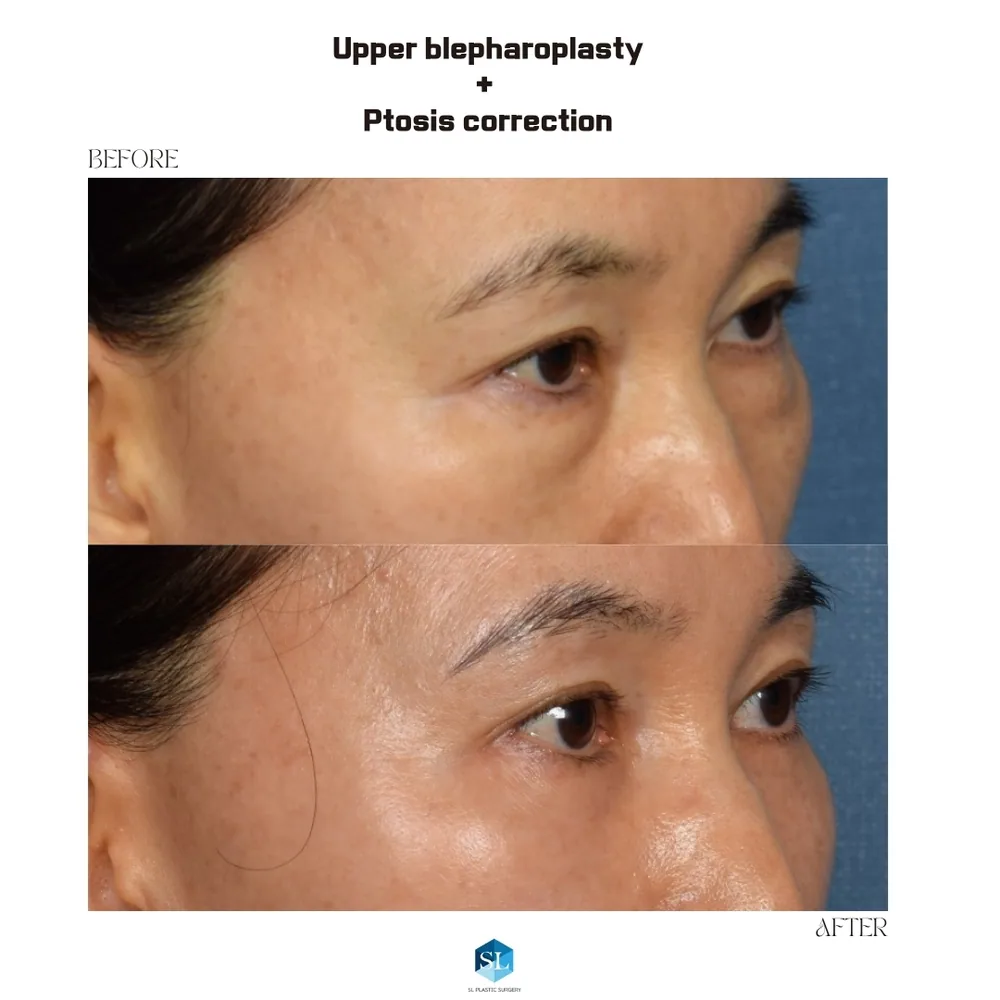
Upper eyelid crease result
This patient's upper lids were refined with blepharoplasty and ptosis correction, creating a clean, natural crease and a more open eye.
Crease swelling looks higher at first and settles over 2–3 months.
Which double eyelid method?
| Buried suture | Partial incision | Full incision | |
|---|---|---|---|
| Best for | Thin lids, little fat | Moderate fat | Thick lids, more fat, revision |
| Back to work | 2–3 days | About 5 days | About 7 days |
| Durability | Good | Very good | Most stable |
Your treatment journey
-
Consultation & imaging
Crease simulation, lid thickness, fat, skin and levator function assessed.
-
Plan & quote
Technique selection, combination options, recovery timeline and a clear quote.
-
Surgery day
Precise technique under local anesthesia with sedation; usually same-day discharge.
-
Aftercare & checks
Cooling, head elevation, stitch removal at day 5–7 if applicable and scheduled follow-ups.
Recovery timeline
- Days 1–3: swelling and mild bruising; cold compresses
- Days 5–7: stitches out for incisional methods
- Weeks 2–3: visible swelling settles
- Months 2–3: final crease
Aftercare tips
- Sleep with your head elevated for 1–2 weeks
- Avoid heavy exercise, saunas and alcohol for about 2 weeks
- Use prescribed ointments and protect scars from UV
- Report increasing pain, redness or sudden asymmetry promptly
Risks & considerations
Swelling, bruising, asymmetry, crease too high or too low, crease loosening (suture method), visible scar (incisional) and possible revision.
Frequently asked questions
Which method is best for me?
It depends on lid thickness, fat and skin. Thin lids suit buried sutures; fuller lids usually need an incision.
Will my eyes look natural?
Crease height and shape are designed for your face; subtle, proportioned creases look most natural.
Is double eyelid surgery permanent?
Incisional creases are the most durable; suture creases can loosen in some patients.
What if my eyelid also droops?
Ptosis correction is added so the lid opens properly and the crease stays stable.
How long should overseas patients stay?
About 5–7 days; incisional methods need stitch removal at day 5–7.
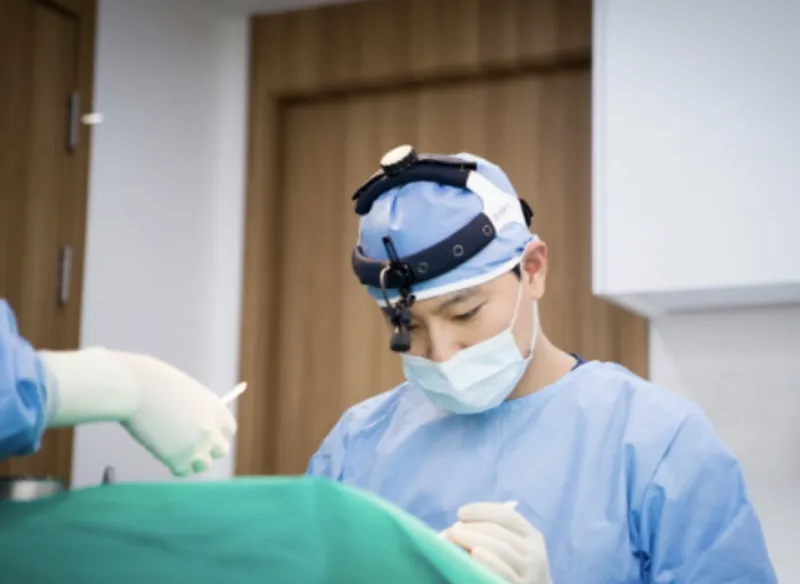
Dr. Lee Young-geun, MD
Board-certified plastic & reconstructive surgeon, founder and sole surgeon of Sinsa L Plastic Surgery. Adjunct clinical professor, Department of Plastic Surgery, Korea University; full member of the Korean Society for Aesthetic Plastic Surgery (KSAPS) and member of IPRAS. 15+ years in plastic surgery.
Last reviewed: October 2026 · About our clinicBook your double eyelid surgery consultation
Send front and oblique photos with your concerns. Dr. Lee will review them and suggest the most suitable plan, with recovery and pricing tailored to your schedule.
Sinsa L Plastic Surgery · 3F–4F, 598 Gangnam-daero, Gangnam-gu, Seoul · Sinsa Station (Line 3) Exit 3, 1-minute walk · Tel 02-517-7410