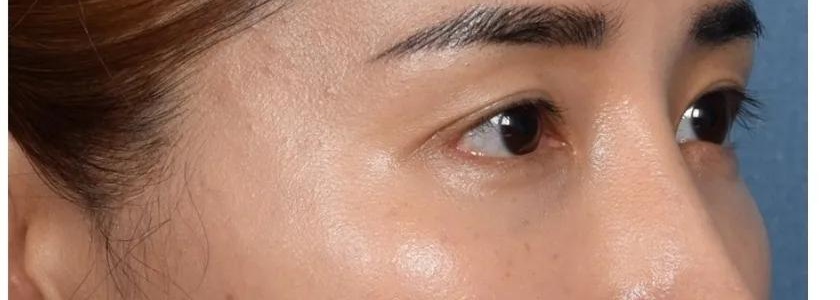
Under-Eye Fat Repositioning vs Fat Removal for Prominent Eye Bags and a Shallow Tear Trough
If you have prominent eye bags and a mild groove beneath them, you will likely hear about two main surgical approaches: removing the bulging fat or repositioning it into the groove. Both are forms of lower blepharoplasty, and both can make the under-eye area look smoother and more rested. Yet they work on different principles and suit different faces. Choosing between them depends less on which technique is "better" in general and more on how your bag, groove, cheek and skin relate to one another.
This article compares fat removal and fat repositioning for people whose main concern is a prominent bag with a relatively shallow tear trough, explaining how each works, who tends to benefit and what trade-offs to consider.
How Each Technique Works
Fat removal
In fat removal, the surgeon opens the septum, the thin membrane that holds orbital fat in place, and trims the portion of each fat compartment that bulges forward. This is commonly done through a transconjunctival incision on the inside of the lower eyelid, which leaves no visible scar. The result is a flatter lower eyelid with less projection.
Fat repositioning
In fat repositioning, the surgeon releases the bulging fat but keeps it attached to its blood supply.
- The fat is then moved downward over the bony rim and secured into the groove beneath the bag, often after partly releasing the ligaments that tether the groove.
- The bulge is reduced and the hollow is filled with living tissue, creating a smoother slope from eyelid to cheek.
When the Tear Trough Is Shallow
The depth of the groove under the bag is one of the most important factors in choosing between the two approaches.
- When the groove is deep or long, repositioning is generally favored because removing fat alone tends to leave a hollow.
- When the groove is shallow, the decision is more nuanced.
- A mild groove often looks deeper than it is because the bulge above it casts a shadow.
- Once the bulge is reduced, the shadow may largely disappear, and removing fat alone may produce a smooth result.
However, even a shallow groove may become more visible over time as the cheek naturally loses volume with age. Some surgeons prefer repositioning even for mild grooves because it preserves volume that the face will need later. Others prefer conservative removal for younger patients with full cheeks, reasoning that the cheek will provide support for many years.
Who Tends to Suit Fat Removal
Fat removal is often considered for patients with:
- Prominent bags as the main concern
- Full cheeks and a positive orbital vector
- Good skin quality
- Little or no groove beneath the bag
- The key is moderation: removing only what bulges rather than emptying the compartments, to avoid a hollow look later
Who Tends to Suit Fat Repositioning
Repositioning is often chosen for people with:
- Bags that sit above even a mild groove
- Thinner cheeks or a flatter midface
- Early hollowing already visible
- Faces that tend to lose volume with age or weight changes
Comparing Recovery
Both techniques are commonly performed through the inside of the eyelid, so neither leaves an external scar.
- Fat removal typically involves less dissection, and swelling may resolve slightly faster.
- Fat repositioning involves releasing ligaments and securing fat lower on the cheek, so swelling may extend further and last a little longer, often one to two weeks for most of the visible swelling and a few months for the final contour.
- Bruising varies with individual factors such as blood vessel fragility and medication use.
Comparing Risks
Each approach has its own main concerns:
- Fat removal: over-removal can cause a sunken look and a more visible bony rim that worsens with age, often needing fat grafting or filler to correct
- Fat repositioning: small irregularities or lumps, temporary firmness and the possibility that some fat shifts during healing
- Both: general risks such as bleeding, infection, asymmetry and, rarely, changes in lid position
Long-Term Considerations
The face continues to change after surgery.
- Over the following decade, cheek volume generally declines and the lid–cheek junction becomes more defined.
- Patients who had fat removed may notice a gradual return of hollowness, while repositioned fat tends to maintain a softer transition. This does not mean removal is a poor choice, but it highlights the importance of conservative removal and of considering how your face is likely to age.
Combining Techniques
Many surgeons now use a blended approach.
- They may reposition fat from the inner and central compartments, where the groove is most visible, and conservatively trim the outer compartment, where repositioning is less necessary.
- A small skin pinch may be added if there is loose skin.
- Tailoring the approach to each compartment often gives more natural results than applying a single technique uniformly.
Frequently Asked Questions
Is fat repositioning always better than removal?
No. Removal can work well for the right patient, particularly when the groove is shallow and the cheek full.
Will I look hollow after fat removal?
Not if it is done conservatively and suits your anatomy, but the risk increases if too much is removed.
Can I choose which technique I want?
You can share your preferences, but the surgeon should explain which approach suits your anatomy and why.
Planning a Consultation in Seoul
Ask the surgeon how deep they consider your groove, whether they plan to remove, reposition or combine techniques, and how they expect your result to look in ten years. Bring photos from different angles and ask them to show you which compartments they intend to treat and how.


Transconjunctival vs Skin-Incision Lower Blepharoplasty When You Have Both Fat Bulges and Loose Skin