Can a Flat Midface Make the Lower Eyelid Look More Hollow?

When people think about hollow under-eyes, they usually focus on the eyelid itself. Yet the cheek beneath it often plays an equally important role. A flat midface, meaning cheeks with relatively little forward projection, can make the lower eyelid look deeper, longer and more tired, even in young people with no real eye bags. Understanding the relationship between the cheek and the lower eyelid explains why some people have persistent hollows despite healthy skin and good sleep, and why treating only the eyelid sometimes gives disappointing results.
This guide explains how the midface supports the lower eyelid, why flatness makes hollows more visible and what options surgeons consider.
How the Cheek Supports the Lower Eyelid
The lower eyelid does not end at the lashes.
- Its soft tissue continues downward to the bony rim of the eye socket, where it meets the cheek.
- In a face with good midface projection, the cheekbone and the fat pads over it sit forward and slightly upward, forming a gentle curve that blends smoothly into the eyelid.
- The cheek acts like a supporting platform, so the transition from eyelid to cheek is short and soft.
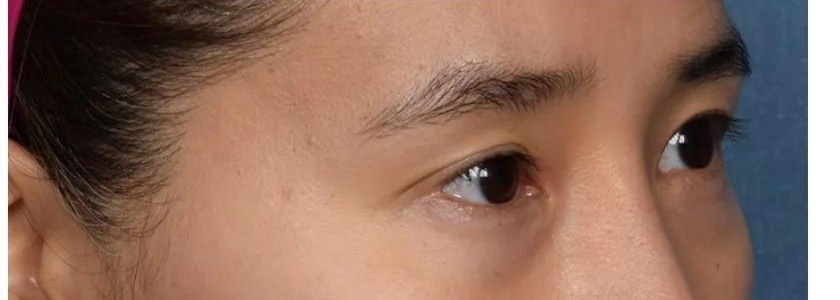
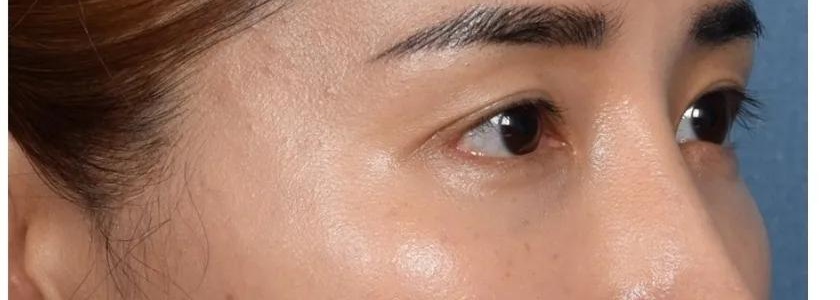
In a flat midface, the cheekbone sits further back and the soft tissue over it is thinner.
- The eyelid area appears to continue further down before it reaches any support. This lengthens the visible distance from the lashes to the cheek, and the bony rim and ligament line become more noticeable.
- The eye looks set deeper into the face, and the under-eye area reads as hollow even when there is no significant fat loss.
Why Flatness Exaggerates Hollows
Light plays a large part in how we perceive the under-eye area.
- With a projecting cheek, overhead light falls evenly across the lower lid and cheek, and shadows are soft.
- With a flat cheek, the lower lid and the tear trough fall into a recess, so light catches the brow and the top of the cheek but leaves the area in between darker. This creates the impression of a sunken or tired eye.
A flat midface can also make small eye bags look larger. Even a modest bulge stands out when there is a hollow beneath it rather than a supportive cheek. As a result, people with flat cheeks often feel they have both bags and hollows, while their actual eyelid anatomy may be fairly mild.
Why Midface Flatness Develops
Midface flatness usually comes from one or more of these causes:
- Inherited bone structure: a cheekbone and upper jaw that sit further back, often visible from the teenage years
- Age-related changes: the orbital rim remodels backward and widens while deep cheek fat pads thin and descend
- Weight loss and lifestyle: significant weight loss, intense endurance exercise and smoking reduce facial soft tissue volume
How Surgeons Assess the Midface
During consultation, the surgeon looks at:
- Front, side and three-quarter views of your face
- How far the cheekbone projects relative to the eye (the orbital vector)
- The length of the lower eyelid from lashes to cheek
- The depth of the tear trough and overall face shape
- Skin quality and lower lid support
Treatment Options
Options range from injectables to surgery:
- Fat repositioning: fills the hollow if there is a bulge above the groove, though it may not fully compensate for a genuinely flat cheek
- Fat grafting: adds projection to the cheek and under-eye area; some fat is absorbed, so more than one session may be needed
- Filler: deep placement along the cheekbone can soften the under-eye hollow indirectly, often more safely than large amounts in the tear trough
- Cheek implants or midface lift: for pronounced flatness, addressing the structural cause more directly
Why Treating Only the Eyelid Can Disappoint
If the main problem is lack of cheek support, removing eyelid fat or skin may make the area look even more hollow and can increase the risk of the lower lid being pulled down during healing.
- Patients with a flat midface often get better and more natural results when the cheek is addressed together with, or even before, the eyelid.
- The aim is to recreate a short, smooth transition rather than to flatten the eyelid further.
Recovery When the Midface Is Treated
Recovery depends on the approach.
- Deep cheek filler usually has little downtime beyond mild swelling for a few days.
- Fat grafting causes more noticeable swelling, often lasting one to two weeks, and the final result becomes clear after about three months when the surviving fat has settled.
- Midface lifts and implants involve a longer recovery, with swelling and tightness that can persist for several weeks.
- When the cheek and eyelid are treated together, swelling may extend from the lower lid down to the cheek, and patients are often advised to sleep with the head elevated and avoid strenuous activity for the first couple of weeks.
Frequently Asked Questions
Can a flat cheek cause dark circles?
It can contribute to shadow-based darkness by making the under-eye area sit in a recess.
Is cheek filler safer than tear-trough filler?
Deep cheek filler is often considered more forgiving, but both require an experienced injector and careful technique.
Do I need surgery to fix a flat midface?
Not always. Filler or fat grafting may be enough for mild to moderate flatness.
Planning a Consultation in Seoul
Ask the surgeon to show you, on side-view and three-quarter photos, how your cheek relates to your lower eyelid. Discuss whether adding volume to the midface could improve the under-eye area, and how this would be combined with any eyelid procedure in your plan.



Transconjunctival vs Skin-Incision Lower Blepharoplasty When You Have Both Fat Bulges and Loose Skin