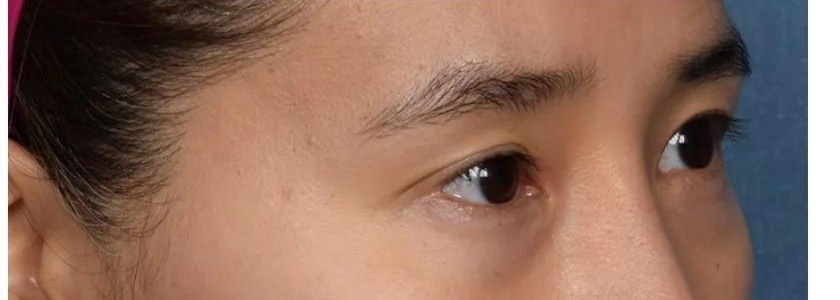
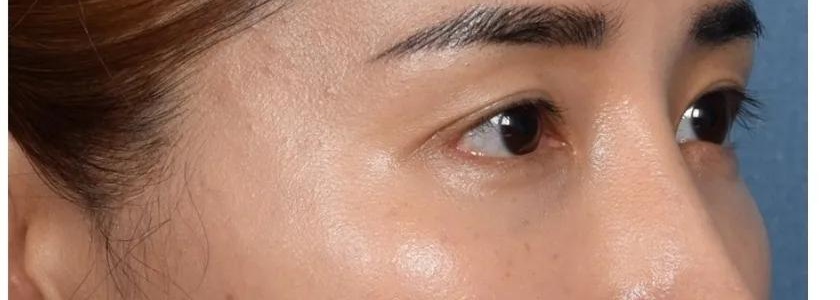
Why Can an Under-Eye Groove Remain After the Eye Bag Is Flattened?

One of the most common surprises after eye bag surgery is that the bulge is gone, yet a line or hollow beneath it is still visible. Some patients feel the operation did not work. In reality, two separate features were usually present from the start: the bag above and the groove below. The surgery may have treated one very well while the other remains, either because it was not part of the plan or because it needs more time and a different approach.
Knowing how the bag and the groove relate to each other helps you plan treatment realistically, judge your results fairly and decide what, if anything, to do next.
The Bag and the Groove Are Different Structures
An under-eye bag is usually orbital fat that has moved forward behind the lower eyelid as the supporting tissues loosen.
- The groove beneath it has a different origin.
- On the inner side it is called the tear trough, and further out it continues as the lid–cheek junction. This is a natural boundary where the eyelid meets the cheek, and it is held in place by small ligaments that attach the skin and muscle to the bone of the eye socket.
When a bag sits directly above a groove, the two features amplify each other. The bulge casts a shadow into the groove, and the groove makes the bulge above it look larger by contrast. Flattening the bag reduces that contrast considerably, but it does not automatically fill the groove, because the ligaments that define it are still there.
Why a Groove Can Remain After Surgery
The fat was removed rather than repositioned
Traditional lower blepharoplasty often trims protruding fat. This flattens the bulge but adds no volume to the groove, and in thinner faces it can make the area look slightly more hollow than before. If your surgery involved removal only, a remaining groove is an expected outcome rather than a failure.
The groove is deeper or longer than the available fat
Even with fat repositioning, where the protruding fat is moved down into the groove, there may not be enough fat to fill a long or deep hollow completely, especially toward the outer cheek.
Midface volume loss and bone structure
With age or weight loss, the cheek fat pads thin and descend, which lengthens and deepens the lid–cheek junction. A flatter cheekbone or a lower orbital rim leaves less support under the eyelid. In these situations, no eyelid procedure alone can fully correct the groove, because the cause sits partly in the cheek.
Skin quality and pigmentation
Thin skin and darker pigmentation along the groove can keep the line visible even when its actual depth has improved.
The Role of the Ligaments
The orbicularis retaining ligament and, near the inner corner, the tear trough ligament anchor the skin along the groove.
- During fat repositioning, many surgeons carefully release part of this attachment so the repositioned fat can sit smoothly across the groove instead of bunching above it.
- How much release is appropriate depends on your anatomy, and it is one of the technical details that varies between surgeons and helps explain why results differ.
How the Groove Changes Over the First Months
Healing does not move in a straight line, so it helps to know the usual pattern:
- Weeks 1–2: swelling often fills the groove temporarily, making it look smoother than the final result
- Weeks 3–6: as swelling drops, the groove can become slightly more visible again, which is when many patients worry
- Months 2–3: tissues soften and the transition becomes more natural
- Months 3–6: the contour is usually clear enough to judge
- A slight reappearance of the groove after the first few weeks is often normal settling, not a sign that the repositioned fat has moved
How Surgeons Plan for Both the Bag and the Groove
Before surgery, a careful surgeon will:
- Measure how far the groove extends toward the cheek
- Compare the fat volume in each compartment with the depth of the groove
- Assess cheek volume and skin thickness
- Ask about previous filler, which can change the tissue planes
- Generally favor fat repositioning when both a bulge and a groove are present, using the bulging fat to fill the hollow rather than discarding it
- Consider small amounts of fat grafting if the groove extends beyond what repositioned fat can cover
Options If a Groove Remains
Most surgeons advise waiting at least three to six months before judging the final contour. If a groove still bothers you after that, options include:
- Micro-fat grafting along the groove, accepting that part of the grafted fat is naturally absorbed
- Hyaluronic acid filler, which has no downtime but needs careful technique and product choice under thin eyelid skin to avoid lumps or a bluish tint
- Cheek volume restoration or midface procedures when the groove is driven mainly by cheek descent
Judging Your Result Fairly
Compare photos taken in the same lighting and position before surgery and at three to six months.
- Focus on the depth of the shadow rather than whether any line exists at all.
- A gentle boundary between eyelid and cheek is part of every face, including young ones.
- The aim is a smooth transition, not a perfectly flat surface from the lashes to the cheek.
Frequently Asked Questions
Does a remaining groove mean the surgery failed?
Not necessarily. If the plan focused on the bulge, a groove may simply be a separate feature that was not treated, or it may still be settling.
Can fat repositioning remove the groove completely?
It often softens the groove considerably, but completely erasing a natural boundary is not always possible or natural-looking.
Can the groove get deeper again with age?
Yes. Aging and volume loss continue after surgery, so some gradual deepening over many years is expected.
Planning a Consultation in Seoul
Ask the surgeon to show you, on your own photos, where the bag ends and the groove begins, and how the plan addresses each. If you have had filler before, mention it even if it was years ago, since residual filler can affect both the assessment and the surgical technique.


Transconjunctival vs Skin-Incision Lower Blepharoplasty When You Have Both Fat Bulges and Loose Skin