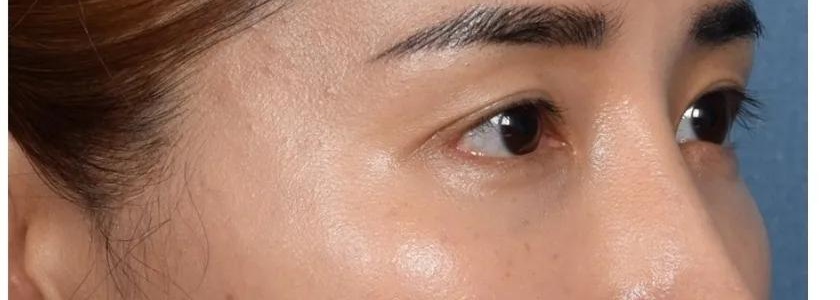
Why Does One Under-Eye Bag Look Larger When I Smile?

Many people first notice that one under-eye bag is bigger than the other in a smiling photo. In the mirror, with a relaxed face, the two sides may look almost the same. But as soon as the cheeks lift and the eyes narrow, one side seems to puff out more, crease more deeply or catch more shadow. It is an extremely common observation, and in most cases there is a clear anatomical reason behind it.
Understanding that reason matters, because "one bag looks bigger when I smile" can describe several different problems: uneven fat, a stronger muscle roll, a difference in cheek movement, swelling, or simply the angle of the camera. Each of these is handled differently, and a good treatment plan starts by working out which one is actually responsible.
What Happens to the Lower Eyelid When You Smile
A smile is not just a movement of the mouth.
- It also contracts the orbicularis oculi, the ring-shaped muscle around the eye, and lifts the cheeks upward.
- As the cheek rises, it pushes soft tissue toward the lower eyelid.
- Any fat that already sits slightly forward is squeezed and pushed outward, the skin over it folds into fine lines, and the band of muscle just under the lashes bunches into a soft roll.
The two halves of the face almost never move with identical strength.
- Most people have a slightly stronger smile on one side, one cheek that rises a little higher, or one eye that narrows more.
- When the tissues under the eyes are also slightly different, these small differences in movement are enough to make one bag look noticeably larger during expression, even if the difference at rest is minimal.
The Most Common Reasons One Side Looks Bigger
Uneven fat pads
Each lower eyelid contains three fat pads: inner, central and outer.
- It is normal for one pad, or one side overall, to project a little more than the other.
- At rest the difference may be hidden, but when the smile compresses the area, the fuller side bulges first and most.
- Surgeons often find that one side has a larger central pad while the other has a more prominent outer pad, which means the two sides look different for different reasons.
A thicker muscle roll
Some people have a more prominent band of orbicularis muscle under the lashes on one side. When it contracts, it forms a thicker roll that adds to the appearance of a bag. This is often mistaken for fat, but it behaves differently: it sits right at the lash line, appears mainly when smiling and flattens when the face relaxes.
Facial and bony asymmetry
The lower eyelid sits on a foundation of bone and cheek tissue, and that foundation is rarely identical on both sides. One eye may be set slightly deeper, one cheekbone may project less, or one orbital rim may sit a little lower. These differences change how the bulge catches light and how much support it has from below.
Swelling and habits
Sleeping on one side tends to leave more fluid in that lower eyelid in the morning, which a smile then exaggerates. Habitual expressions also matter: if you tend to smile more strongly on one side, that cheek rises higher and compresses the lower eyelid more.
When the Camera Is Part of the Problem
Casual smiling photos often exaggerate a difference between the two sides:
- Phones are usually held slightly to one side, so the closer eye looks larger and the farther eye narrower
- Overhead lighting adds shadow under the nearer bag
- Compare several photos taken straight on, at eye level, with soft light from the front
- Many people find the real difference is smaller than their selfies suggested, which is useful to know before deciding on surgery
Fat, Muscle or Skin? How to Tell the Difference
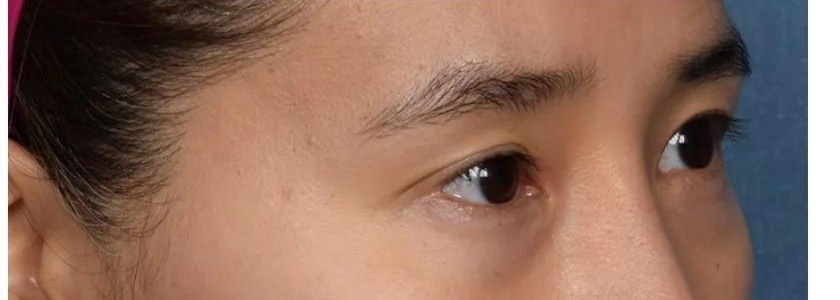
A simple set of photos, all taken in the same lighting, can tell you a great deal. Take one relaxed, one looking up and one smiling, then compare:
- Fat bulges: visible at rest and fuller when you look up, because looking up pushes the fat forward
- Muscle roll: appears mainly when smiling and sits right under the lashes
- Loose or crepey skin: shows fine folds that deepen with expression
- Swelling: tends to vary noticeably between morning and evening
- Most people have a mix, but one factor usually dominates on the bigger side
What a Surgeon Will Assess
At consultation, a careful surgeon will usually check:
- Each fat compartment on both sides, compared side by side
- How the lower eyelid moves through a gentle and a broad smile
- Skin quality and laxity
- Lower eyelid tone and support
- Cheek height and any bony asymmetry
- Previous filler or surgery, since old filler can create one-sided fullness
- Which differences can be improved, and which come from bone structure or muscle activity that surgery is not designed to change
How Asymmetric Bags Are Usually Treated
When fat is the main cause, lower blepharoplasty or fat repositioning is planned separately for each eye. Rather than doing the same thing on both sides, the surgeon adjusts how much fat is moved or reduced from each compartment so that the two sides end up balanced. This is why two patients with "one bigger bag" can receive quite different surgical plans.
When a thick muscle roll is the main issue, surgery aimed only at fat may not change the smiling appearance much.
- Small doses of muscle-relaxing injections are sometimes used to soften a prominent roll, and some surgical approaches can adjust the muscle, though most surgeons try to preserve a natural roll because it looks youthful.
- When fine crinkling is the main complaint, skin treatments such as laser resurfacing usually help more than fat surgery.
Setting Realistic Expectations
No face is perfectly symmetrical, and smiling naturally exaggerates the differences that exist.
- The goal of treatment is to reduce a noticeable imbalance so that both sides look harmonious at rest and during expression, not to make them identical.
- When you review before-and-after photos, ask to see smiling photos as well as relaxed ones. They give a much more honest picture of how results look in everyday life.
Frequently Asked Questions
Is it normal for under-eye bags to be uneven?
Yes. Mild asymmetry is very common and is often more visible in photos than in the mirror.
Should I treat only the bigger side?
Occasionally that is appropriate, but most surgeons evaluate both sides, because treating one side alone can make the untreated side look worse by comparison.
Will the smiling bag disappear after fat repositioning?
If fat is the main cause, it usually looks much smoother once swelling settles. If a muscle roll or skin texture is responsible, different or additional treatment may be needed.
Planning a Consultation in Seoul
Before your consultation, prepare photos taken at rest, looking up and smiling, all at eye level and in even lighting. Ask the surgeon to explain what is causing the difference on each side and how the plan will treat each eye individually. A clear explanation of the cause is the best predictor of a natural, balanced result.



Transconjunctival vs Skin-Incision Lower Blepharoplasty When You Have Both Fat Bulges and Loose Skin