What Does a Negative Orbital Vector Mean for Lower Eyelid Surgery?
If you are researching lower eyelid surgery, you may come across the term "negative vector" or "negative orbital vector." It sounds technical, but it describes something simple and important: how far forward your eyeball sits compared with your cheekbone. This relationship affects how the lower eyelid is supported, how your under-eye area ages and how safely certain lower eyelid procedures can be performed. People with a negative vector are not unsuitable for surgery, but they need a plan designed with their anatomy in mind.
This guide explains what the term means, how surgeons check for it and how it changes surgical planning.
What Is the Orbital Vector?
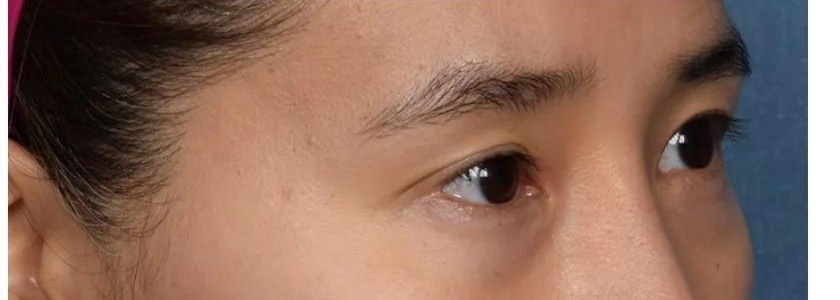
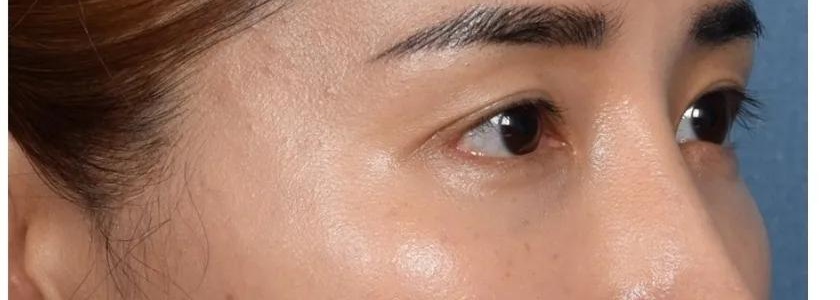
When you look at a face from the side, you can draw an imaginary vertical line from the front of the cornea down toward the cheek.
- If the cheekbone and the soft tissue over it sit in front of this line, the vector is called positive.
- The cheek projects forward enough to support the lower eyelid from below, a bit like a shelf.
- If the cheek sits behind the line, so that the eyeball projects further forward than the cheek, the vector is called negative.
A neutral vector falls in between, with the cheek roughly level with the front of the eye. Most people fall somewhere along this spectrum, and the position can shift with age as cheek volume declines.
Why the Vector Matters
The lower eyelid rests against the eyeball and relies partly on the support beneath it.
- In a positive vector, the cheek helps hold the lid up.
- In a negative vector, the lid has to stretch over a more prominent eye with less support from below.
- Gravity, swelling and scar tissue after surgery all exert a downward pull on the lid.
- With a positive vector, the lid can usually withstand that pull.
- With a negative vector, the same forces are more likely to drag the lid down.
As a result, people with a negative vector are at higher risk of lower lid retraction, in which the lid margin sits too low and more white of the eye shows beneath the iris. They are also more prone to a rounded or sad-looking outer corner and dryness after surgery.
Who Tends to Have a Negative Vector?
A negative vector is more common in people with:
- Prominent eyes or relatively flat cheekbones, often inherited
- High myopia, where the eyeball is longer
- Thyroid eye disease, which can push the eye forward
- Age-related thinning and descent of the cheek fat pads, which can turn a neutral vector into a negative one
How Surgeons Assess the Vector
Assessment usually combines several checks:
- A side-view examination comparing the cornea with the most forward point of the cheek, sitting upright and looking straight ahead
- Profile photos to document the relationship
- An exophthalmometer to measure eye prominence in some cases
- Lower lid laxity, lid margin position, the amount of white below the iris and tear function
How a Negative Vector Changes the Surgical Plan
With a negative vector, surgeons typically adjust the plan in three ways:
- Conservative skin and muscle removal: very little skin, or none, often through a transconjunctival approach
- Carefully placed lid support: canthopexy or canthoplasty anchored slightly higher and deeper on the bone, so the lid supports the eye rather than slipping beneath it (the "clothesline" effect)
- Adding cheek volume: fat repositioning, fat grafting, cheek implants or midface lifting to increase projection and turn a negative vector into a more neutral one
An Example of How Planning Differs
Consider two patients of the same age who both have moderate eye bags.
- The first has full cheeks that sit in front of the eye.
- For her, a transconjunctival fat repositioning with a small skin pinch is likely to give a smooth result with little risk to lid position.
- The second has prominent eyes and flat cheekbones.
- If the same skin pinch were performed, his lid would have little support from below, and healing forces could pull it down.
- His surgeon might instead avoid skin removal, reposition fat further onto the cheek, add a small amount of fat grafting to the midface and support the outer corner with a carefully placed canthopexy.
Both patients have the same visible complaint, but their plans are built around different anatomy. This is why two people searching for the same procedure can receive quite different recommendations, and why a surgeon who does not mention your profile view may be missing an important part of the picture.
Recovery and Expectations
Patients with a negative vector may experience more noticeable swelling and temporary lid lowering during the first few weeks after surgery.
- Surgeons sometimes recommend taping or massage techniques to support the lid during healing, and closer follow-up is common.
- The final result may take longer to settle.
- A realistic goal is a well-supported lid with a smoother contour, not a dramatic change that risks function.
Frequently Asked Questions
Can I have eye bag surgery if I have a negative vector?
Yes, in many cases, but the technique needs to be adjusted to protect lid support, and the surgeon may recommend adding volume or support.
Is a negative vector visible to me?
You may notice that your eyes look prominent from the side or that your cheeks look flat, but a surgeon is best placed to confirm it.
Does a negative vector affect upper eyelid surgery?
It is mainly relevant to the lower eyelid, though prominent eyes can also influence planning for the upper lid.
Planning a Consultation in Seoul
Bring side-profile photos and ask the surgeon whether they consider your vector positive, neutral or negative. If it is negative, ask how their plan protects lid support, whether they recommend adding cheek volume and how they would handle swelling during recovery. A surgeon who explains the vector clearly is showing that they are considering both function and appearance.



Transconjunctival vs Skin-Incision Lower Blepharoplasty When You Have Both Fat Bulges and Loose Skin